Interview by Sheldon Baker
James Greenblatt, MD, is the founder of Psychiatry Redefined, an educational platform dedicated to the personalized, evidence-based treatment of mental health. Psychiatry Redefined offers continuing online education, CME-approved courses, webinars, and a professional fellowship in functional and integrative medicine for mental illness.
Dr. Greenblatt is also the co-founder of Finally Living Now, a precision functional psychiatry clinic for children and adults.
A pioneer in the field of integrative medicine, Dr. Greenblatt has treated patients since 1988. After receiving his medical degree and completing his psychiatry residency at George Washington University, he completed a fellowship in child and adolescent psychiatry at Johns Hopkins Medical School. He served as the chief medical officer at Walden Behavioral Care in Waltham, MA for nearly 20 years, and is an assistant clinical professor of psychiatry at Tufts University School of Medicine and Dartmouth College Geisel School of Medicine. An acknowledged integrative medicine expert, educator, and author, Dr. Greenblatt has lectured internationally on the scientific evidence for nutritional interventions in psychiatry and mental illness. Through three decades of practice and research, he is a leading contributor to helping physicians and patients understand the role of personalized medicine for mental illness.
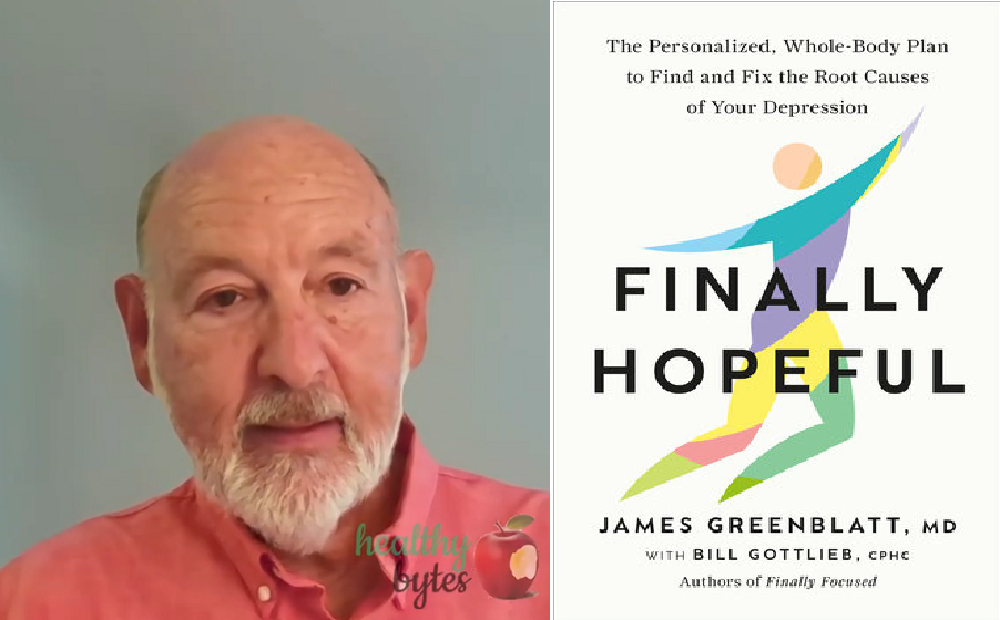
Dr. Greenblatt is the author of nine books, including the best-seller, Finally Focused: The Breakthrough Natural Treatment Plan for ADHD., his updated edition of Answers to Anorexia, and Functional & Integrative Medicine for Antidepressant Withdrawal, His new book, Finally Hopeful, offers a personalized, whole-body plan to find and fix the root causes of depression. (Altern Ther Health Med. 2026;32(3):4-7).
Sheldon Baker is an InnoVision contributing editor. His freelance editorial content can also be found in several lifestyle publications, and as CEO of Baker Dillon Group LLC, he has created numerous brand marketing communications and public relations campaigns for health and wellness organizations. Contact him at [email protected].
Alternative Therapies in Health and Medicine (ATHM): Congratulations on your new book, Finally Hopeful.
James Greenblatt, MD: Thank you. Much appreciated.
ATHM: Let’s first look at the difference between your psychiatry model and traditional psychiatry. Can you explain that?
Dr. Greenblatt: Sure. Our current model in conventional psychiatry is really very simple. It’s symptom-based medicine. If someone is sad, they get an anti-sad medicine that we call antidepressants. If they’re anxious, they get an anti-anxiety medication. And functional psychiatry, the core of what I’ve done and the thesis of the book, Finally Hopeful, is looking a little deeper, not just symptomatic treatment, but looking at root cause, be it vitamins, minerals, hormones or gut dysbiosis.
ATHM: How do you describe the difference between integrative and functional psychiatry?
Dr. Greenblatt: That’s a really important question, because integrative medicine has kind of been integrated, for lack of a better word, into our traditional models. We have Harvard and Stanford having programs in mindfulness and yoga. Lifestyle is now a fellowship a doctor can take, and that’s great. Those are great adjuncts, but functional medicine looks at the root cause. It looks at genetics, biochemistry and nutrition. And all too often, integrative medicine doctors or programs just kind of focus on lifestyle and don’t do a deeper dive.
ATHM: Please explain the clinical utility of a functional medicine model of depression, and how your test and treat and model differs from the current traditional model.
Dr. Greenblatt: The functional psychiatry model for depression sees every patient as unique. It’s just not either providing a supplement that might help depression, or medicine. It’s looking at nutritional deficiencies, everything from iron to B12, folate and vitamin D. They all have been shown to contribute to depression. So, we’re looking at nutritional deficiencies, hormones, thyroid, testosterone and the gut, and being able to understand with a genetic analysis what might be contributing to that person’s depression. They are unique and personalized models.
ATHM: Clarify, if you will, dietary, metabolic, genetic, and environmental risk factors for depression, and explain the mechanisms by which these factors influence mood and cognition.
Dr. Greenblatt: As I just mentioned, some of the nutritional deficiencies like B12, folate, zinc and magnesium, are directly responsible for the synthesis of neurotransmitters in the brain. Vitamin D usually being thought of for immune or bone health. But we know vitamin D is the cofactor for the body to make serotonin. So, vitamin D deficiency is directly related to the synthesis of this major neurotransmitter that affects our mood, appetite, and behavior. So much of the functional psychiatry world is looking at these precursors or cofactors that are required for kind of optimal function of the brain and optimal neurotransmitter synthesis.
ATHM: Based on what you’ve said so far, I take it you’re quite a proponent of dietary supplements.
Dr. Greenblatt: Yes, absolutely. Dietary supplements are critical, but I think what a functional psychiatrist does is not just recommend supplements without testing, and that’s the critical piece, that personalized approach, because everyone’s different. Ten patients coming in with depression might have 10 different nutritional deficiencies or metabolic changes that are contributing to their depression.
ATHM: So, how does the integration of nutrition and lifestyle changes impact the treatment of depression?
Dr. Greenblatt: We know some lifestyle interventions, in particular sleep and exercise, have profound effects on mood and depression. There’s not a better antidepressant out there than exercise, and sleep hygiene, directly correlated with depression and even suicide risk. But it’s very hard to tell a depressed patient to just go to the gym or sleep better. The functional psychiatry model digs deeper as to what might be contributing to fatigue and lack of motivation, and what might be interfering with sleep. So, lifestyle is critically important, but it’s usually kind of the icing on the cake and the glue that holds the treatment together hard to be the foundation.
ATHM: Can you further explain the gut-brain network, and how nutrients like vitamin D, B vitamins, magnesium, and others and depression are intertwined.
Dr. Greenblatt: We know that there’s nervous tissue in our gut and actually in our brain, so it’s critically important we call it a two-way street. The brain communicates with the gut and the gut communicates with the brain. The good news is there’s an explosion of research on this gut-brain interaction. I don’t think we have all the details, but a functional psychiatrist can look at gut health, and there are some very clear predictors of the gut, we call dysbiosis, that contribute to anxiety and depression. Not everyone with depression has a gut issue that’s contributing to it. Hence, the model of testing, so we can determine what might be contributing to a person’s depression.
ATHM: How about the role that amino acids play in depression?
Dr. Greenblatt: That’s been really important in my practice for individuals who’ve struggled with multiple approaches, and oftentimes we find low levels of these essential amino acids. We think of amino acids as the building blocks of every protein in the body, and most of the neurotransmitters, serotonin, dopamine, and norepinephrine. Without adequate amino acid precursors, your body just can’t build these neurotransmitters, and we’ve known that research for many years. Sometimes, it’s a diet deficient in amino acids. But more often, it is a problem with digestion and absorption. Patients are eating adequate protein, but they’re not digesting it properly. They don’t have enough acid in their stomach, so they become deficient in amino acids.
ATHM: Explain the mechanisms by which low cholesterol and essential fatty acid intake precipitate depressive pathophysiology.
Dr. Greenblatt: The brain is 60% fat. People are now familiar with fish oil and omega-3s and that has contributed to our understanding of depression both as an augmentation strategy, and as a low dietary omega-3 in the diet contributing to depression. But the other fat that people don’t talk enough about, which we write about and try to help clinicians understand, is low levels of cholesterol in the blood is associated with depression and even suicide risk.
Everyone is obsessed with lowering your cholesterol, but there’s major mental health implications of a cholesterol level being too low. There are individuals, we believe, who just genetically have very low total cholesterols, under 130. Research has demonstrated those individuals are at higher risk for depression and suicide.
ATHM: But cholesterol being too low is very rarely talked about. Am I correct?
Dr. Greenblatt: I think our cardiologists are obsessed with the lower the number the better. I’ve heard stories of people trying to push total cholesterol under 100, but nobody understands the implications for mental health. Think about cholesterol as the precursor to vitamin D. It’s the precursor to every steroid hormone in the human body and it’s critical for bile acids and digestion, as well as for brain function. We need cholesterol. And most cholesterol is not obtained from our diet. Much to everyone’s disagreement, 85% of cholesterol we make is in our liver. We make it for a purpose. It’s the building blocks of steroid hormones and receptors in the cell membrane in the brain.
ATHM: Discuss the functional differences between pharmaceutical and nutritional lithium and describe biologic mechanisms through which lithium confers neuroprotection.
Dr. Greenblatt: I’ve been studying lithium for many years. It’s fascinating. People think of it as a drug, which is for bipolar illness, but it’s a natural element. It’s on the periodic table. You learn about it in chemistry. It’s critical for technology. Our computer batteries, cell phones, and airplanes all use lithium. My interest has been in lithium as a nutritional supplement. What the research has demonstrated for many years, and recently confirmed, is that lithium is protective of brain health and is translated into studies globally. If you have high lithium in your drinking water, meaning your tap water, you may have lower rates of Alzheimer’s, major mental illness, and suicide. There are lower rates of suicide in those communities. If you have lower lithium, there’s higher rates of suicide. It’s pretty stunning research. That is just often ignored by the medical community.
ATHM: Again, something that’s not really talked about, or at least not much.
Dr. Greenblatt: Not until recently did we get to use the word. Harvard researchers published in the Nature Journal in August of 2025, where they demonstrated that lithium orotate, the supplement that we recommend and talked about for 30 years, actually reversed Alzheimer’s in mice models and prevented Alzheimer’s pathology in mice models. So, it actually broke up the plaques and tangles of Alzheimer’s neuropathology. It was a very incredibly, meticulous study that got a lot of interest, and people are now looking at understanding how we can utilize lithium orotate as a nutritional supplement that we’ve been talking about for 30 years.
ATHM: You have an antidepressant describing plan. How is it helpful with people with depression, or those with antidepressant withdrawal?
Dr. Greenblatt: When we started prescribing antidepressants in the 80s, like Prozac, people thought they were miracle drugs with no side effects. Then, as people tried to stop taking them, coming off these medications, there were significant withdrawal symptoms. It wasn’t for everybody, so it was quite challenging to understand why some people had severe withdrawal, that could be agitation, anxiety, suicidal thoughts, or brain zaps. It had somewhat devastating symptoms for some people. For me, it became clear over the years it wasn’t necessarily the medication, it was what was going on with the patient. By using a functional psychiatry approach, I believe we can almost completely eliminate this antidepressant withdrawal syndrome, because we do the functional medicine testing, replete all the missing micronutrients, and then tapering so withdrawal becomes much simpler, easier, and safer.
ATHM: Depression has many possible causes including psychological, social, lifestyle, medical and biological. Which of those do you feel are the most relevant, or are they all?
Dr. Greenblatt: It’s like picking your favorite child, or dad, or anything else. I think for some, it’s their life story. The trauma becomes critically important. For others, it could be as simple as a B12 deficiency that’s not treated. But usually, a good functional psychiatrist is going to be able to integrate those kinds of psychological, biological, and I would add, genetic vulnerabilities to nutritional deficiencies, or how our neurotransmitters work and are becoming much more important. We now can look at these and understand how to utilize genetics in this integrative and collaborative approach.
ATHM: With all that you’ve said so far, why did you write the book, Finally Hopeful?
Dr. Greenblatt: Well, the title is probably most important to me because as a psychiatrist practicing now for over 30 years, I was hearing too many hopeless stories from parents and families of individuals who didn’t respond to our conventional model of medications and therapy and were giving up hope. Even though much of the work that’s discussed in the book has been known for a while, the reason I wanted to get this book out now is that there’s research to support everything that we discuss. So, this is evidence-based.
Not that the research is discussed among traditional psychiatrists, and not that our traditional model is looking at blood tests or nutritional deficiencies, but nobody can argue with the research. It’s there. I wanted to offer hope for patients and families, and more importantly, be able to share with my colleagues this is evidence-based science, not alternative medicine.
ATHM: Finally Hopeful can be referred to as a personalized model for patients.
Dr. Greenblatt: Actually, a precision-based model. So, don’t compare what your neighbor is taking for the depression, or your uncle, or anyone else for that matter. It has to be individualized to each person with that model, and I think we can appreciate tremendous improvement in so many patients.
ATHM: Might reading your book change one’s perception of how well antidepressants work, or who they work best for?
Dr. Greenblatt: I think so because my career and the book is not against the use of medications. The model that we’re describing, and the theme, is always how to optimize medications if you need them, how to minimize side effects, or how to taper off them. A nutritional psychiatry, or functional psychiatry, approach will support all those interventions. It’s not either or. Many patients feel they have to choose whether they’re going to take medications, because that’s what their doctor recommends. Or if someone goes to a doctor, perhaps a naturopath or chiropractor, and say they just want to take supplements. So, I think my new book and our model of nutritional psychiatry can be utilized with or without medications.
ATHM: How might a patient advocate for a more personalized treatment plan with their healthcare provider?
Dr. Greenblatt: Good question. Ten years ago, many mental health professionals or psychiatrists would tell patients, there’s no research on nutrition about the gut and it’s just a bunch of hogwash. But now, I think most practitioners are telling their patients there’s a growing amount of research. You should find a practitioner who finds it hard to argue with the research. It’s challenging, I think, to find practitioners knowledgeable in this area. But the first step is to advocate for yourself. Ask your doctor to look at vitamin D, B12 and folate levels. If you need more assistance look for doctors trained in this functional psychiatry model. We just opened a new functional psychiatry clinic, Finally Living Now, that does just that. It is a precision functional psychiatry program with dedicated practitioners who will take patients through the process.
ATHM: I believe you’re one of the experts, if not the utmost expert in this arena. Do other health professionals reach out to you for advice?
Dr. Greenblatt: Absolutely. As I mentioned, this year we were able to organize a collective, virtual clinic called Finally Living Now that’s available nationwide. It’s for clinicians who have gone through additional training in functional psychiatry and have supported their careers by learning. This program helps patients with a functional psychiatry consultation, where they can bring back results to their clinician that they’re working with to support treatment. I just think the message has to be depression is not a lifelong illness. For many, it can be treated and there’s hope.
ATHM: I’m going to read one of your quotes, it’s a little long, but I’d like you to respond to your own words. And that quote is:
Psychiatry can do better, much better, but only if clinicians and their patients take advantage of decades of largely ignored research and clinical results that show depression is not all in your head. The research and results show that many of the root causes of depression are in your body, your digestive system, hormone-producing endocrine system and immune system, and most importantly in your brain, and its connection to all those other systems.
Can you respond, or maybe even further elaborate on that?
Dr. Greenblatt: Sure. It relates to all the things we’ve been talking about. A slide I sometimes use in my presentations is just a picture of a neck. Anatomy 101 for psychiatry is that we have a neck. What happens in the body affects the brain, and what happens in the brain affects the body. There are many people who benefit from therapy and medications, but there’s at least a third, if not more, that don’t. And for those, I think we have an ethical obligation to dig deeper as medical professionals. We should be looking at hormones that contribute to depression. Also, micronutrients and the gut to understand the role of heavy metals and toxins. As I say in the quote, the research is there, but it’s been ignored. The good news for all of us is now our medical community is appreciating it and continuing the research, and patients are advocating for a different approach and looking to support their health with nutritional supplements. Hopefully, the work that we’re doing is tailored to the individual, not just thrown out the way we typically do with medications.